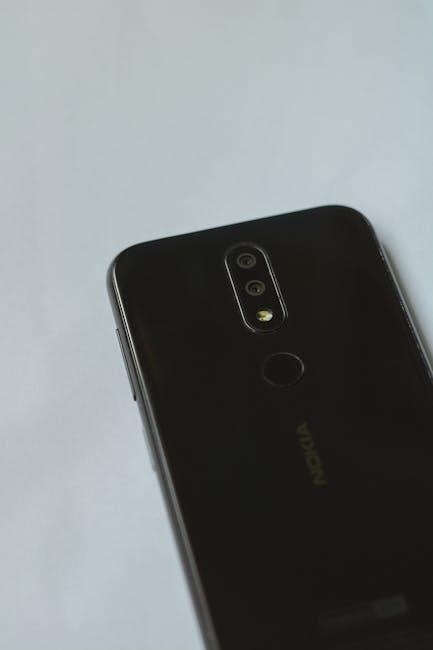
Nokia 2760 User Manual: An Overview
This manual details the Nokia 2760’s features, operation, and troubleshooting. It covers call functions, messaging, multimedia, connectivity, and settings for optimal use.
Welcome to the Nokia 2760! This user-friendly mobile phone combines classic design with essential features for seamless communication. It’s designed for simplicity and reliability, offering a straightforward experience for making calls, sending messages, and enjoying multimedia.
The Nokia 2760 provides a durable build and long-lasting battery life, making it a dependable companion for daily use. This guide will walk you through every aspect of your new device, ensuring you maximize its potential.
Unboxing and Contents
Upon opening the Nokia 2760 package, you should find the following items: One Nokia 2760 mobile phone, a rechargeable battery (likely pre-installed), a Micro-USB charger, and a user manual. Some packages may also include a headset or warranty information leaflet.
Carefully inspect all components for any signs of damage. If anything is missing or appears defective, contact your retailer or Nokia support immediately. Retain the original packaging for potential warranty claims or returns.
Phone Overview: Key Features and Buttons
The Nokia 2760 features a classic candybar design with a physical keypad. Key components include the power button (typically on the side), volume controls, a Micro-USB port for charging, and a 3.5mm headphone jack. The phone boasts essential functions like calling, texting, and a basic camera.
Navigation is managed via the directional pad and selection buttons. Familiarize yourself with these controls for seamless operation. The display shows call information, messages, and menu options.

Getting Started
Prepare your Nokia 2760 for use by inserting SIM and memory cards, charging the battery, and learning the basic power on/off and navigation procedures.
Inserting SIM and Memory Cards
To insert a SIM card, power off your Nokia 2760. Locate the SIM card slot, typically on the side or under the battery cover. Gently open the tray and place the SIM card into the designated slot, ensuring correct orientation.
For a memory card (MicroSD), locate the memory card slot – often near the SIM card slot. Insert the card gently until it clicks into place. Avoid excessive force.
Always power off the device before inserting or removing cards. Incorrect insertion may damage the phone or card.
Charging the Phone
To charge your Nokia 2760, connect the provided USB cable to the phone’s charging port. Plug the other end into a compatible USB power adapter or a computer’s USB port.
A charging indicator will appear on the screen, showing the battery level. Allow the phone to charge fully for optimal performance.
Avoid using damaged chargers or charging in extremely hot or cold environments. Disconnect the charger when the battery is fully charged to prolong battery life.
Powering On and Off
To power on your Nokia 2760, press and hold the power button located on the side of the device until the Nokia logo appears on the screen. The phone will then boot up and display the home screen.
To power off the phone, press and hold the power button again; A menu will appear; select “Power off” and confirm your choice.
Ensure the phone is fully off before removing the battery or performing any maintenance;
Basic Navigation and User Interface
The Nokia 2760 utilizes a simple, intuitive user interface. Navigation is primarily achieved using the directional pad and the central selection button. Pressing up, down, left, or right moves the cursor through menus and options.
The selection button confirms choices, while the back button allows you to return to the previous screen. Short presses typically select items, while long presses may reveal additional options or functions.
Explore the menus to familiarize yourself with the phone’s layout.

Making and Managing Calls
This section guides you through making, answering, and managing calls on your Nokia 2760, including accessing call history and contacts efficiently.
Making a Call
To initiate a call on your Nokia 2760, begin by unlocking the phone and accessing the dialer. You can either manually enter the phone number using the keypad or select a contact from your address book.
To select a contact, navigate to the ‘Contacts’ menu and choose the desired entry. Once the number is displayed, press the call button – typically a green phone icon – to connect.
For frequently dialed numbers, utilize the speed dial feature for quicker access. The phone also supports hands-free calling if a compatible headset is connected via Bluetooth.
Answering a Call
When receiving an incoming call on your Nokia 2760, the phone will ring or vibrate, and the caller’s number or name (if saved in contacts) will be displayed. To answer the call, press the green call button.
Alternatively, you can often answer by pressing any key, depending on your phone’s settings.
To reject an incoming call, press the red end/reject button. You can also send a text message to the caller indicating you are unavailable, or activate call forwarding to another number.
Call History and Contacts
The Nokia 2760 stores a record of your recent calls in the call history, accessible through the phone’s menu. This includes dialed calls, received calls, and missed calls, displayed with date and time.
To access contacts, navigate to the contacts application. Here, you can add new contacts, edit existing ones, and search for contacts by name.
You can also assign contacts to speed dial locations for quick access, and synchronize contacts with supported online services.

Messaging
The Nokia 2760 supports text and picture messaging. Users can send SMS, MMS, and access voicemail for convenient communication with others.
Sending and Receiving Text Messages
To create a new message, access the messaging application and select “Write new.” Enter the recipient’s number or select from your contacts. Compose your message using the keypad; predictive text assists with faster input.
Press send to deliver the message; Incoming messages will appear in your inbox with a notification. You can view, reply to, or forward received texts. Manage messages by deleting or archiving them to keep your inbox organized. The Nokia 2760 provides a simple and efficient texting experience.
Picture Messaging (MMS)
To send a picture message, begin a new message and select the MMS option. Add a recipient and then attach a picture or video from your gallery. You can also add text to your MMS message for context.
Ensure your network supports MMS before sending. Receiving MMS messages functions similarly to text messages, appearing in your inbox. MMS messages may use more data, so be mindful of your data plan. The Nokia 2760 allows sharing multimedia content easily.
Voice Mail
Accessing your voicemail on the Nokia 2760 typically involves dialing a specific number provided by your mobile carrier. This number may vary, so consult your carrier’s documentation. Follow the automated prompts to listen to new messages, delete old ones, or adjust your voicemail settings.
Ensure your voicemail password is secure. Some carriers offer visual voicemail, allowing message previews. Contact your service provider for assistance with voicemail setup or troubleshooting any issues you encounter.

Multimedia Features
Enjoy entertainment with the Nokia 2760’s camera, video recording, FM radio, and music player. Capture memories and listen to your favorite tunes easily!
Camera and Video Recording
The Nokia 2760 features a built-in camera allowing you to capture photos and record videos. Access the camera application from the main menu to begin. Adjust settings like image quality and resolution before taking pictures. To record a video, switch to video mode within the camera app and press the record button.
Stored media can be found in the gallery or file manager. Share your photos and videos via Bluetooth or USB connectivity. Remember to manage storage space to avoid running out of memory during recording.
FM Radio
The Nokia 2760 includes an FM radio for listening to your favorite stations. Access the FM radio application through the phone’s menu. Ensure headphones are connected, as they function as the antenna for optimal reception. You can scan for available stations automatically or manually tune into specific frequencies.
Save your preferred stations for quick access. The radio supports background playback, allowing you to use other phone features while listening. Battery life may be affected during prolonged radio use.
Music Player
Enjoy your favorite tunes with the Nokia 2760’s music player. Transfer music files to a microSD card for expanded storage. The player supports common audio formats, ensuring compatibility with a wide range of music libraries. Navigate through your music collection by artist, album, or song title.
Create playlists to organize your music and listen seamlessly. Utilize the phone’s basic audio controls – play, pause, skip, and volume adjustment – for a personalized listening experience.

Connectivity
The Nokia 2760 offers Bluetooth and USB connectivity. These features enable wireless data transfer and connection to compatible devices for versatile functionality.
Bluetooth Connectivity
The Nokia 2760 utilizes Bluetooth technology for wireless communication with other Bluetooth-enabled devices. This allows for hands-free calling with compatible headsets, transferring files such as photos and music to other phones or computers, and connecting to wireless speakers or car kits. To pair a device, navigate to the Bluetooth settings in the phone’s menu and select “Search for devices.” Ensure the other device is in pairing mode. Once found, select the device and follow any on-screen prompts, potentially entering a passcode for secure connection.
USB Connectivity
The Nokia 2760 features USB connectivity, enabling data transfer and charging when connected to a computer. Using the provided USB cable, you can transfer photos, videos, and other files between your phone and a computer. Select “USB Mass Storage” mode on your phone when prompted after connecting. The phone will appear as a removable drive on your computer. You can also use the USB connection to charge the phone’s battery from a computer’s USB port or a USB power adapter.

Settings and Customization
Personalize your Nokia 2760 with adjustable settings for date, time, language, and security. Tailor the phone to your preferences easily.
Date and Time Settings
Adjusting the date and time ensures accurate timestamps for calls, messages, and other phone functions. To modify these settings, navigate to the Settings menu and select ‘Date & Time’. You can manually set the date, time, and time zone, or enable automatic updates using network services.
Ensure the correct time zone is selected for accurate daylight saving time adjustments. Incorrect settings can lead to scheduling errors and missed appointments. Regularly verify these settings, especially after traveling to different time zones.
Language Settings
The Nokia 2760 allows you to customize the phone’s interface language for a more comfortable user experience. Access the ‘Language’ menu within the Settings to view a list of available languages. Simply select your preferred language from the list, and the phone’s menus and displays will update accordingly.
This feature is particularly useful for users who are more proficient in a language other than the default. Ensure the selected language is fully supported for complete functionality.
Security Settings
Protect your Nokia 2760 and personal data with the robust security features available in the Settings menu. You can set a PIN code to prevent unauthorized use of your device. Additionally, explore options for phone locking and SIM card security to further safeguard your information.
These settings allow you to control access and minimize the risk of unwanted calls or data breaches, ensuring your privacy and peace of mind.

Troubleshooting
This section provides solutions for common issues. Learn how to resolve problems and, if needed, perform a factory reset to restore default settings.
Common Issues and Solutions
Problem: Phone won’t power on. Solution: Ensure the battery is charged; try a different charger. Problem: No network signal. Solution: Check SIM card insertion, network coverage, and airplane mode is off. Problem: Poor audio quality during calls. Solution: Adjust volume, check for obstructions near the microphone, or restart the phone.
Problem: Messaging issues (sending/receiving). Solution: Verify network connection, check message center number, and ensure sufficient memory. Problem: Bluetooth pairing fails. Solution: Ensure Bluetooth is enabled on both devices, and they are within range. Restart both devices and try pairing again.
Resetting the Phone
Soft Reset: Press and hold the power button until the phone restarts. This resolves minor software glitches without data loss. Factory Reset: Navigate to Settings > Restore factory settings. Caution: This erases all personal data – contacts, messages, and files – restoring the phone to its original state.
Before a factory reset, back up important data to a memory card or external storage. Ensure the phone is sufficiently charged during the reset process to prevent interruption. A factory reset addresses persistent software issues but should be a last resort.

Technical Specifications
The Nokia 2760 supports network compatibility, and details its dimensions, weight, and battery information. These specifications provide crucial device performance insights.
Network Compatibility
The Nokia 2760 is designed to operate on GSM networks, specifically supporting dual-band 900/1800 MHz or quad-band 850/900/1800/1900 MHz frequencies, depending on the regional variant.
This ensures compatibility with mobile operators across various countries. Users should verify network support with their service provider to confirm optimal performance and functionality. The phone’s compatibility extends to 2G networks, providing reliable voice and messaging services. It’s crucial to note that 3G, 4G, and 5G networks are not supported by this device.
Dimensions and Weight
The Nokia 2760 boasts a compact and lightweight design for convenient portability. Its dimensions are approximately 109 x 54 x 13.1 millimeters (4.29 x 2.13 x 0.52 inches) when closed, and slightly larger when flipped open.
The phone weighs around 97 grams (3.42 ounces), making it comfortable to carry in a pocket or bag. These specifications contribute to its user-friendly experience, balancing functionality with a manageable size and weight for everyday use.
Battery Information
The Nokia 2760 is powered by a BL-5C battery, offering reliable performance for extended use. The battery capacity is 1020 mAh, providing substantial talk time and standby duration.
Typical talk time is approximately 18 hours on 2G networks, while standby time can reach up to 400 hours. Charging time varies depending on the charger used, but generally takes around 2-3 hours for a full charge. Proper battery care ensures optimal longevity and performance.

Safety and Warranty Information
Always follow safety precautions to avoid damage. The Nokia 2760 warranty details cover manufacturing defects for a specified period; review included documentation.
Important Safety Precautions
Prioritize safe and responsible usage of your Nokia 2760. Avoid operating the device while driving; find a safe location first. Keep the phone dry and away from extreme temperatures.
Do not attempt to disassemble the device yourself, as this voids the warranty and poses safety risks. Use only approved accessories and chargers to prevent damage or injury.
Be mindful of volume levels to protect your hearing. Follow all local regulations regarding mobile phone use in specific environments, like hospitals or aircraft.
Warranty Details
Your Nokia 2760 is covered by a limited warranty against defects in materials and workmanship for a specified period from the date of purchase. This warranty does not cover damage resulting from misuse, accidents, or unauthorized modifications.
To claim warranty service, present proof of purchase and contact Nokia support. The warranty may vary by region; consult the separate warranty document included with your device for complete details.
Excluded are normal wear and tear, battery degradation, and issues caused by third-party software.